Richfield (435) 896-6497
Ephraim (435) 283-4076

Like us on facebook
Follow us on twitter
Review us on google

Blog

Swelling and Severs' Disease

Severs’ disease is a particular kind of affliction of the foot that primarily impacts children. This condition occurs when the child, typically going through a growth spurt and engaged in some kind of physical activity, experiences heel pain. The heel bone, in relation to the heel growth plate, can become aggravated, which is a sign of Severs' disease. Although pain in the heel is a defining symptom of Severs’ disease, swelling around the heel may also develop. If a child experiences swelling around the heel and this area is also red in color, this may actually indicate that another source of pain exists. For example, this can be a sign that a stress fracture or ankle sprain may be causing pain. If you have a child that is experiencing heel pain, contact a podiatrist today for more information.

Sever's disease often occurs in children and teens. If your child is experiencing foot or ankle pain, see Dr. Blake Zobell from Utah. Our doctor can treat your child’s foot and ankle needs.

Sever’s Disease

Sever’s disease is also known as calcaneal apophysitis, which is a medical condition that causes heel pain I none or both feet. The disease is known to affect children between the ages of 8 and 14.

Sever’s disease occurs when part of the child’s heel known as the growth plate (calcaneal epiphysis) is attached to the Achilles tendon. This area can suffer injury when the muscles and tendons of the growing foot do not keep pace with bone growth. Therefore, the constant pain which one experiences at the back of the heel will make the child unable to put any weight on the heel. The child is then forced to walk on their toes.

Symptoms

Acute pain – Pain associated with Sever’s disease is usually felt in the heel when the child engages in physical activity such as walking, jumping and or running.

Highly active – Children who are very active are among the most susceptible in experiencing Sever’s disease, because of the stress and tension placed on their feet.

If you have any questions, please feel free to contact one of our offices located in Richfield and Ephraim, Utah . We offer the newest diagnostic and treatment technologies for all your foot care needs.

Read more about Sever's Disease

Reminder: When Was the Last Time...?

Custom orthotics, or shoe inserts, should be periodically replaced. Orthotics must fit properly to give you the best results. Protect your feet and ankles!

Rock Climbing and Foot Injuries

About half of all acute injuries sustained in rock climbing involve the legs and feet. Often these injuries happen from falls to the ground or rocks hitting a person during a fall. Rock climbers can suffer from strains, contusions, and fractures to the feet that can stop them from participating in this enjoyable activity for some time. Wearing shoes that are too tight can lead to overstrain injuries that can increase stress on the forefoot during rock climbing. If you are a rock climber and want more information about protecting your feet and ankles while participating in your sport, or if your lower extremities have been injured, consult with a podiatrist.

Ankle and foot injuries are common among athletes and in many sports. They can be caused by several problems and may be potentially serious. If you are feeling pain or think you were injured in a sporting event or when exercising, consult with Dr. Blake Zobell from Utah. Our doctor will assess your condition and provide you with quality foot and ankle treatment.

Common Injuries

The most common injuries that occur in sporting activities include:

  • Achilles Tendonitis
  • Achilles Tendon Rupture
  • Ankle Sprains
  • Broken Foot
  • Plantar Fasciitis
  • Stress Fractures
  • Turf Toe

Symptoms

Symptoms vary depending upon the injury and in some cases, there may be no symptoms at all. However, in most cases, some form of symptom is experienced. Pain, aching, burning, bruising, tenderness, tightness or stiffness, sensation loss, difficulty moving, and swelling are the most common symptoms.

Treatment

Just as symptoms vary depending upon the injury, so do treatment options. A common treatment method is known as the RICE method. This method involves rest, applying ice, compression and elevating the afflicted foot or ankle. If the injury appears to be more serious, surgery might be required, such as arthroscopic or reconstructive surgery. Lastly, rehabilitation or therapy might be needed to gain full functionality in the afflicted area. Any discomfort experienced by an athlete must be evaluated by a licensed, reputable medical professional.  

If you have any questions please contact one of our offices located in Richfield and Ephraim, Utah . We offer the newest diagnostic and treatment technologies for all your foot and ankle needs.

Read more about Sports Related Foot And Ankle Injuries

Blisters and Hiking

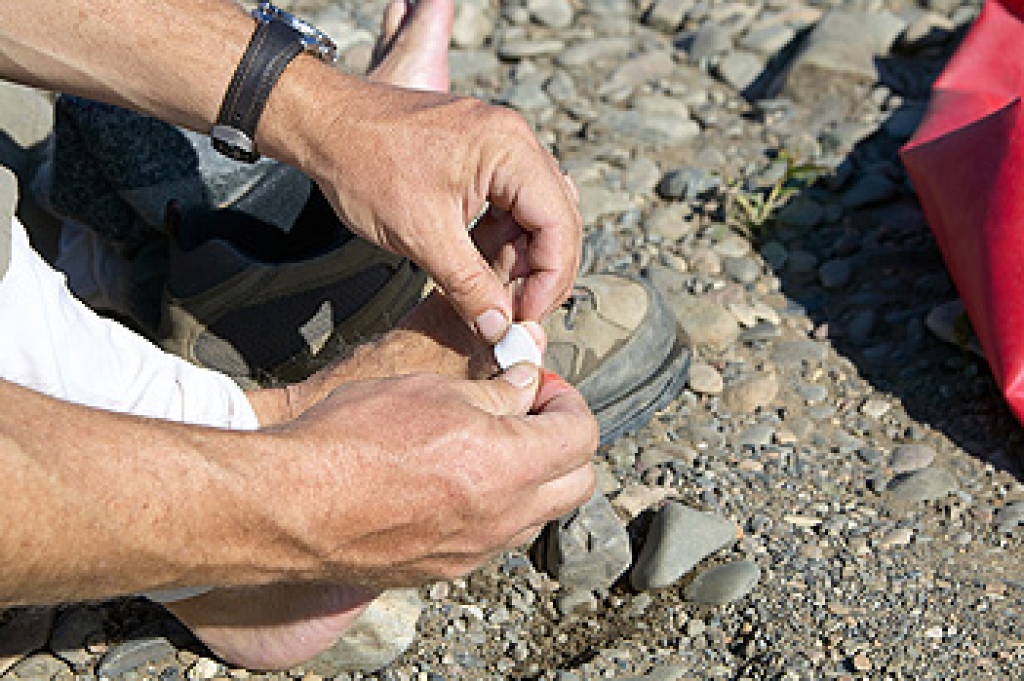
Any hiker knows that hiking with blisters on the feet can be a significant annoyance and source of potential pain. Blisters can develop on the feet for many different reasons (typically due to some kind of pressure that is applied to an area of the feet). Blisters can be especially pernicious to hikers. Blisters are the most common foot affliction among hikers. Since hiking requires a significant amount of physical movement including walking and climbing, blisters can diminish the hiking experience. There are several things that hikers might consider doing to prevent blisters from forming in the first place. For example, hikers might consider getting hiking boots that fit correctly and do not rub up against the feet in uncomfortable ways. Hikers can also be on the lookout for the other main causes of blister formation: heat and moisture. Hikers can also be mindful about wearing thin socks to prevent the blisters from forming in the first place. Contact a podiatrist today if you are a hiker concerned about preventing foot blisters.


Blisters are prone to making everyday activities extremely uncomfortable. If your feet are hurting, contact Dr. Blake Zobell of Utah. Our doctor can provide the care you need to keep you pain-free and on your feet.

Foot Blisters

Foot blisters develop as a result of constantly wearing tight or ill-fitting footwear. This happens due to the constant rubbing from the shoe, which can often lead to pain.

What Are Foot Blisters?

A foot blister is a small fluid-filled pocket that forms on the upper-most layer of the skin. Blisters are filled with clear fluid and can lead to blood drainage or pus if the area becomes infected.

How Do Blisters Form?

Blisters on the feet are often the result of constant friction of skin and material, usually by shoe rubbing. Walking in sandals, boots, or shoes that don’t fit properly for long periods of time can result in a blister. Having consistent foot moisture and humidity can easily lead to blister formation.

Prevention & Treatment

It is important to properly care for the affected area in order to prevent infection and ease the pain. Do not lance the blister and use a Band-Aid to provide pain relief. Also, be sure to keep your feet dry and wear proper fitting shoes. If you see blood or pus in a blister, seek assistance from a podiatrist.

If you have any questions, please feel free to contact one of our offices located in Richfield and Ephraim, Utah . We offer the newest diagnostic and treatment technologies for all your foot care needs.
Read more about Blisters

Reasons Why Plantar Fasciitis Can Develop

People who are afflicted with plantar fasciitis often have extreme heel pain. It is defined as a condition that affects the plantar fascia, which is the band of tissue that is found on the sole of the foot. Its function is to connect the heel to the toes and may become inflamed for various reasons. These can include standing on hard surfaces for the majority of the day or wearing shoes that do not fit correctly. Many patients have found mild relief when specific stretches are performed, in addition to wearing shoes that have adequate heel and arch support. Additionally, obesity may contribute to getting plantar fasciitis, and it is beneficial to lose weight which can help to reduce the pressure on the heels. If you have heel pain, please consult with a podiatrist as quickly as possible who can determine if the cause is plantar fasciitis, and treat it accordingly.

Plantar fasciitis can be very painful and inconvenient. If you are experiencing heel pain or symptoms of plantar fasciitis, contact Dr. Blake Zobell  from Utah. Our doctor can provide the care you need to keep you pain-free and on your feet.

What Is Plantar Fasciitis?

Plantar fasciitis is the inflammation of the thick band of tissue that runs along the bottom of your foot, known as the plantar fascia, and causes mild to severe heel pain.

What Causes Plantar Fasciitis?

  • Excessive running
  • Non-supportive shoes
  • Overpronation
  • Repeated stretching and tearing of the plantar fascia

How Can It Be Treated?

  • Conservative measures – anti-inflammatories, ice packs, stretching exercises, physical therapy, orthotic devices
  • Shockwave therapy – sound waves are sent to the affected area to facilitate healing and are usually used for chronic cases of plantar fasciitis
  • Surgery – usually only used as a last resort when all else fails. The plantar fascia can be surgically detached from the heel

While very treatable, plantar fasciitis is definitely not something that should be ignored. Especially in severe cases, speaking to your doctor right away is highly recommended to avoid complications and severe heel pain. Your podiatrist can work with you to provide the appropriate treatment options tailored to your condition.

If you have any questions, please feel free to contact one of our offices located in Richfield and Ephraim, Utah . We offer the newest diagnostic and treatment technologies for all your foot care needs.

Read more about Plantar Fasciitis
Connect with us